
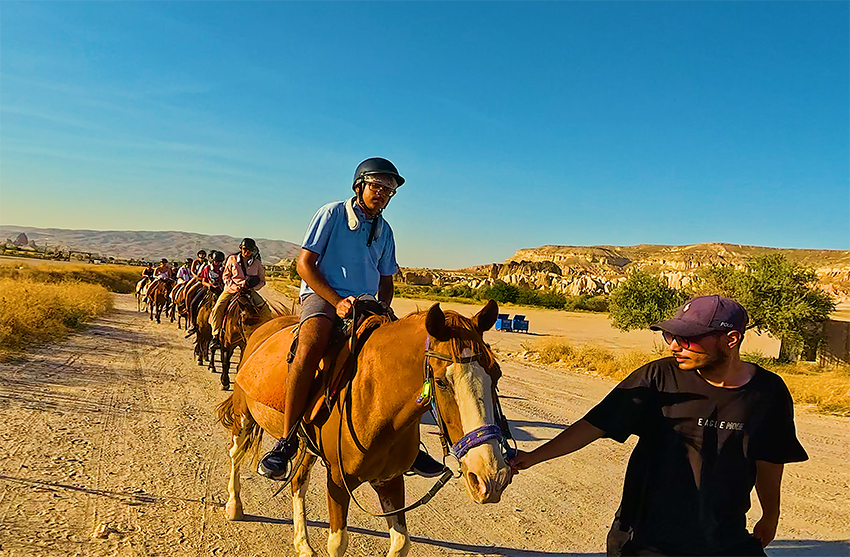
Horse training in Cappadocia is not based on speed or performance. It is based on adaptation. The land here teaches the horse before any human does. Training a horse in this region means preparing it to understand rock, silence, narrow paths, and unexpected movement.
This is very different from training horses on flat land or inside arenas.
Cappadocia Training Starts With the Terrain
In Cappadocia, horses are introduced to valleys at a very young age. Before carrying riders, they are walked slowly through natural routes. This early exposure allows the horse to learn how to place its feet on uneven ground, how to slow down on slopes, and how to stay balanced between rocks.
The goal is not control. The goal is confidence.
A horse that understands the land does not panic. It reacts naturally.
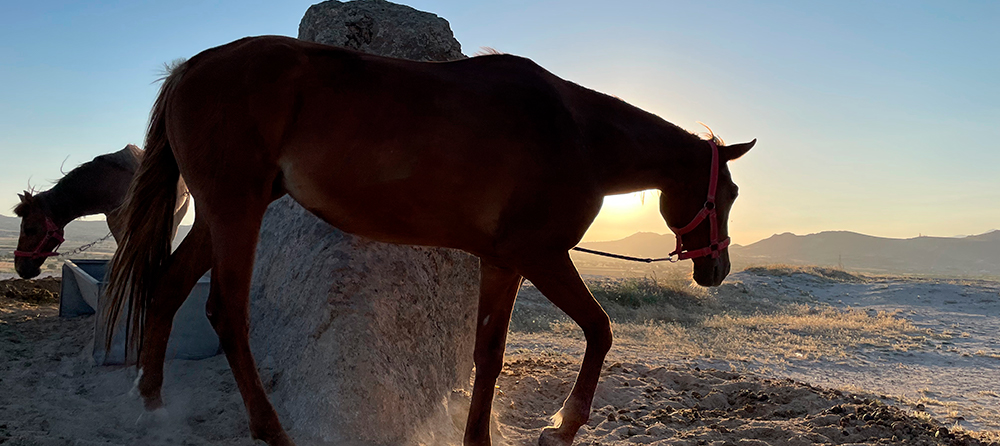
Desensitization to Natural Elements
Cappadocia is full of movement and sound that can surprise an untrained horse. Wind passing through valleys, birds flying suddenly, balloons rising at dawn all of these are part of daily life.
Training focuses heavily on desensitization:
- Horses are exposed to wind early
- They walk near shadows and rock formations
- They learn to stay calm when balloons appear overhead
This process takes time. Rushing it creates nervous horses. Patience creates reliable ones.
One Horse, One Personality
There is no single training method that works for every horse here. Each horse reacts differently to terrain, sound, and human energy. Some horses are naturally calm, others are alert and curious.
Good trainers in Cappadocia do not force behavior. They observe patterns:
- How the horse reacts in narrow paths
- How it responds to sudden light changes
- How it behaves when riding alone versus in a group
Training adapts to the horse, not the opposite.
Balance Before Speed
Speed is never a priority in Cappadocia horse training. Horses are taught to walk steadily before they ever trot. A controlled walk over rocky terrain is more valuable than fast movement on flat ground.
This approach protects:
- The horse joints
- The rider balance
- The overall safety of the route
A well trained Cappadocia horse moves with intention, not urgency.
Trust Between Horse and Rider
Training does not end when a horse starts carrying riders. Horses are trained to read body language rather than react to pressure. Small shifts in posture, weight, and reins are enough for communication.
This creates a calmer riding experience, especially for beginners. The horse leads as much as the rider does.
Why This Training Matters
Horses trained in Cappadocia are not show horses. They are terrain horses. Their value comes from consistency, calm behavior, and the ability to adapt to changing conditions.
This type of training cannot be rushed and cannot be copied easily elsewhere. It is shaped by the land, the climate, and years of quiet repetition.
A well trained Cappadocia horse does not perform.
It moves with the landscape.

Benzer Turlar
Horse Riding Culture in Cappadocia
Rose Valley Soft Ground and Open Flow
Sunrise vs Sunset Horse Riding